- Establishing shot of the room - Showing Surroundings.
- Shot of somebody working / doing something (could use a time-lapse)
- Audio of student / teacher being interviewed over the top of the film - music could be used too.
- Film interview also - film can cut from the action inside the class room, back to the image of the student being interviewed.
- Shots of the college in general, Study centre / Library / Canteen
- Make a point of showcasing specialist equipment in HNC / Photography / Music & Music Tech e.g. Film students on Apple Macs / Using DSLR cameras / Photography Studio / Actual sound recording studio.
- Could include footage from trips, Madrid / Birmingham / Manchester.
Thursday, 25 February 2016

Tuesday, 16 February 2016
A contextual study of the American New Wave between 1967-1970
I will be studying the American New Wave from 1967 through to 1970. I will be focusing my research around on Arthur Penn's 1967 film Bonnie and Clyde, John Schlesingers's 1969 film Midnight Cowboy and finally Dennis Hoppers 1969 film Easy Rider. I have chosen these films in particular as they were so important in the change of American cinema, each offering a very new, fresh and interesting style of narrative. I will be looking at the social conditions of the production of the film and study its cultural impact.
New Wave cinema was first introduced when a group of French film makers (La Nouvelle Vague) decided that they were to make films in a way that was different to what anyone had seen before. They did this by cutting in ways nobody had seen before and by filming on location rather than using a set. The term new wave has been defined as “a movement in which a group of people introduce new styles or ideas in art, music, politics, etc.”(1). In reference to film this allowed filmmakers to do things that had never been seen before and allowed them to include a more creative and exploratory narrative.
The American New Wave, just like The French New Wave, was promoting change in world cinema. The first new wave in America was introduced throughout the 50’s where films concentrated on including realism and a truthful depiction of American Society (2). Later on in the 60’s American new wave cinema continued to thrive and was dubbed “The New Hollywood Generation”, the films made during this period were representative of a counter culture and an aesthetic influenced by the French new wave (3).
1960’s in America was a time where a sub culture was to be born, the hippy movement involved a variety of social concerns and beliefs, they believed that life was all about being happy and if something felt good, then you should go ahead and do it (4). Hippies also rejected large and established institutions, “calling them ‘the establishment’, ‘big brother’, and ‘The Man’ hippies believed the dominant mainstream culture was corrupt and inherently flawed and sought to replace it in utopian society.”(5).
Easy Rider, directed by Dennis Hopper is a film crucial to the American new wave of the 1960’s. Friends Wyatt and Billy travel across America in search of the spiritual truth, throughout the film they experience issues and hatred from many people in small towns across America, they also meet other traveler’s in search of an Alternative lifestyles. However Billy and Wyatt never find what they are looking for and are tragically killed off at the end of the film.
Dennis Hoppers ‘Easy Rider’ fits perfectly in with the sub-culture created with the hippy movement both with the narrative and the overall production of the text, the film goes against the rules of film that were in place at the time as instead of filming in a Hollywood studio, they were filming on location, taking drugs and constantly changing environments. By doing this it therefore rejected the large institution of Hollywood, just like the hippies moved away from the established institutions.
Protagonists Billy and Wyatt are seen throughout the text smoking dope. One key point of the text where the characters are seen smoking dope is the sequence that takes place between 54:27-01.00. Here Wyatt is seen encouraging character George to smoke marijuana rather than drink alcohol, without much persuasion George eventually gives in and begins to smoke joining in with the ‘hippy lifestyle’. Georges lack of will power to say no to smoking dope is very symbolic of the time.
Billy then spots a UFO in the sky which leads George onto talking about other societies in our solar system, he say’s “They’re people just like us within our own solar system, except their society is much more highly evolved, I mean they don't have no wars, they have no monetary systems, they don't have any leaders” Here, what George is talking about is exactly what the hippy movement of the 1960’s represented, “Hippies rejected middle class values, opposed nuclear weapons and the Vietnam war.” (6). George talks about a society with no wars or violence and a society where leaders are not needed as people are able to lead themselves. Dennis Hopper uses this sequence as a way of representing key social and institutional factors of the time, including the idea that the hippy movement involved peace and harmony to the people of America at the time.
The LSD scene at the end of the film Easy Rider involves a dreamlike, mad and surreal state which is created through clever editing. A mid-shot is used and it doesn't cut until after the characters have all taken LSD, once the drug has been taken the scene descends into madness, quick cuts between characters and and camera shots such as close ups long shots and some hand held camera work helps to reflect the madness and ensures that the audience are hypnotised by the visuals. (21) - Easy Rider
The counter culture of the time was represented significantly within the film Easy Rider through the mise en scene of the film. Characters drug taking and the way they looked was a reflection of the youth of the time. Prior to this film being made counter culture figures, if depicted cinematically at all, were side characters and or villains, never protagonists, and young people in general were portrayed like the squares in the beach part movies. Easy Rider spoke to a segment of society that felt marginalised by the Establishment, a segment that had been rarely reflected in movies. (20)
Dennis Hopper was one of the directors of the American new wave that wanted to change the way films were made traditionally and this is exactly what he did with Easy Rider. In the documentary ‘Easy Rider Raging Bulls’ Hopper say’s “I didn't really like American films, I didn't like what was being done with most American films at the time”(7). This was the attitude of most directors at the time as they wanted to do something different, something that would be of interest to the people. Peter Bogdanovich says in ‘Easy Rider Raging Bulls’ “The studio system essentially collapsed, by 63 it was over and nobody knew what the hell to do”(8). This could be considered the start of American new wave cinema, due to the studio system of Hollywood failing and as Paul Shcrader asay’s in the documentary ‘Easy Rider Raging Bulls’ “There big old films weren't making any money” so therefore something had to change.
The film itself impacted a large American audience at the time, Easy Rider due to its extensive drug use involved within the film, which involved characters smoking marijuana and taking LSD. Despite the hippy movement of the 1960’s drug’s were still considered a ‘taboo topic’, in the book ‘Easy Rider - York Film notes’ it writes "An alarmed reaction was merited. Not because acid meant madness and breakdown, but because the underground pleasures of it and other drugs broke a major taboo” (9).
The ‘Easy Rider - York Film notes’ also writes "Many more like Billy and Wyatt made cannabis a more comfortable part of their way of life; dope as an enhancement of everyday living, not a pathway to nirvana. The smoking scenes in Easy rider provide some of its happiest moments.” (10). Even though the hippy movement of the 1960’s was in full swing, people after watching the film began smoking dope just like Billy and Wyatt and incorporating it into everyday life, in a way Easy Rider helped to accelerate the whole hippy movement .
Another film that was crucial to the new wave of American cinema was Arthur Penn’s 1967 film ‘Bonnie and Clyde’ the tale of bank robber Clyde who befriends waitress Bonnie Parker as he is stealing her mothers car. The pair go on to rob banks and embark on criminal activity together before they both meet a tragic end and are shot to death in a violent and faced pace ending sequence.
Bonnie and Clyde was released in 1967 and was therefore released whilst the Vietnam war was in full flow, it was the first war to be televised and so violence was becoming more and more of an everyday occurrence for American people. The war in Vietnam clearly had something to do with this, but other things such as The Civil Rights movement and the disillusionment of the Baby Boomer generation did too (11). Bonnie and Clyde when it was released was just another reminder of the violence that was current of the time in the 1960’s.
Other reasons that contributed to the controversy of Bonnie and Clyde being released were the assassinations of Martin Luther King and Bobby Kennedy, so at that point in time it was a serious point of violence and disruption in the states (16). Critic of the New York Times Bosely Crowther attacked the acting, direction and the script on 14th of August saying “This blending of farce with brutal killings is a s pointless as it is lacking in taste, since it makes no valid commentary on the already travestied truth. And it leaves an astonished critic wondering just what purpose Mr Penn and Mr Beatty think they serve with this strangely antique sentimental claptrap.” (17).
Bonnie and Clyde introduced extreme and graphic violence into the world of cinema, and is something that has stayed around to still be a huge part of cinema today. Initially the movie received negative reviews as people were outraged over the gratuitous violence but now is commonly shown unedited on American television. Bonnie and Clyde was a groundbreaking film, and one of the most important films in American history (12).
One specific sequence in the film Bonnie and Clyde that represents the new found violence director Arthur Penn was promoting is the ending sequence where Bonnie Parker and Clyde Barrow are gunned down. The 2 characters are on the way to their safe house where they are tragically ambushed, the pair are shot repeatedly as blood soaks the clothing of Bonnie whilst bullets are ripping through her. Fast cuts between the gunmen and the 2 protagonists making for an fast paced, exciting and very violent ending. The camera then shows the pair both lying motionless. This sequence was revolutionary to American cinema at the time, the scene was the first time in which movie technicians learnt that blood, puffs of smoke and clothes ripping were the way bullets worked. Before 1967 getting shot in film was a more or less a tidy event, now because of Bonnie and Clyde’s ending sequence sachets of blood and small powder charges sewn into clothes of the actors would become part of films resources (13).
Although Bonnie and Clyde is now a hugely popular name for US cinema it didn't start of that way. On its release in September it grossed $2600 at one theatre in Cleveland, when it was played at the same theatre in theatre it grossed $26000 (14). That wasn't the end of the shocking increase in sales, by the end of 1967 the film had bagged $2.5million in rentals, however when the film was re-release in 1968 it netted $16.5million in rentals, becoming one of the top 20 grossing films of all time! (15)
Midnight Cowboy is a film based on a novel by James Leo Herlihy, the film itself is all about a young Texas boy named Joe Buck who works as a dish washer. He travels to New York in search of fortune but instead ends up in the company of street hustler Ratso Rizzo. The film ends with talking about getting a regular job to Razzo before noticing that his friend is dead, the driver tells Joe that there is nothing else to do but continue to Miami.
Midnight Cowboy just like Easy Rider was a film that included lots of drug taking and was something that the hippies of the 1960’s could relate to. Director John Schlesinger and his Polish Cinematographer ensured that the film brought a fresh and credible eye to their vision of the city, the film is also full of memorable images. The pair managed to introduce techniques such as rapid fire editing and trip dream sequences, this being a key representation of the movement of the time. This was the first time that these trips sequences had been brought from the underground film scene and put into the mainstream American Cinema. One issue regarding the production of this film however was concern that a british director would not be able to successfully capture the real New York. (18).
Monday, 1 February 2016
Planning
What do you want to happen when people finish watching your video?
When people finish watching my video I want them to feel the need to apply and go to King Edward IV college to study at a higher level academically and treat it as their own pathway to the university/apprenticeship/future job of their choice. I also want them to feel as if they have a strong idea of what the college is like and what it is all about.
What does this audience care about and how does your product or service relate to those concerns?
This audience cares about their education and furthering their studies by leaving school and attending a sixth form college. My promotional video for King Edward College IV relates to the concerns of its audience by showing them a video of just how good the college is, and helps persuade the audience that King Edward College IV is the correct choice to help further their education.
What specific problem am I trying to solve and how do I communicate the solution to the problem?
I am trying to solve the issue of the students being unable to decide what college they wish to attend. I will do this by communicating a clear message that KEGS is a great college and one this is suite well to the needs of the audience.
How are you going to get people to watch your video?
I will put the video on the college You Tube channel and also put it on the King Edward College website, so that people interested in going to the college can check the website and see a promotional video for the college.
What is the idea for this video?
The idea for the video is to show a range of different activities that take place within the college.
Plan -
1- Pitch the idea to staff members of King Edward IV college in a staff meeting. This is so we are able to get our ideas and points across, explaining why we want to make a promotional video for the college, what it will entail and how it will benefit the college.
2- We will also communicate with teachers via email to try and schedule lessons which we will be able to attend and film.
3- We want to visit numerous subject and gather as much footage as possible to split into 10, 10 second videos of each subject, quickly summing up what that subject is all about and why future students should choose to study it.
4- We will then have to present the footage to see if it is good enough to be able to feature on the KEGS app.
5- If footage is considered good enough then we shall begin editing and putting the video together.
When people finish watching my video I want them to feel the need to apply and go to King Edward IV college to study at a higher level academically and treat it as their own pathway to the university/apprenticeship/future job of their choice. I also want them to feel as if they have a strong idea of what the college is like and what it is all about.
What does this audience care about and how does your product or service relate to those concerns?
This audience cares about their education and furthering their studies by leaving school and attending a sixth form college. My promotional video for King Edward College IV relates to the concerns of its audience by showing them a video of just how good the college is, and helps persuade the audience that King Edward College IV is the correct choice to help further their education.
What specific problem am I trying to solve and how do I communicate the solution to the problem?
I am trying to solve the issue of the students being unable to decide what college they wish to attend. I will do this by communicating a clear message that KEGS is a great college and one this is suite well to the needs of the audience.
How are you going to get people to watch your video?
I will put the video on the college You Tube channel and also put it on the King Edward College website, so that people interested in going to the college can check the website and see a promotional video for the college.
What is the idea for this video?
The idea for the video is to show a range of different activities that take place within the college.
Plan -
1- Pitch the idea to staff members of King Edward IV college in a staff meeting. This is so we are able to get our ideas and points across, explaining why we want to make a promotional video for the college, what it will entail and how it will benefit the college.
2- We will also communicate with teachers via email to try and schedule lessons which we will be able to attend and film.
3- We want to visit numerous subject and gather as much footage as possible to split into 10, 10 second videos of each subject, quickly summing up what that subject is all about and why future students should choose to study it.
4- We will then have to present the footage to see if it is good enough to be able to feature on the KEGS app.
5- If footage is considered good enough then we shall begin editing and putting the video together.
Monday, 25 January 2016
Promotional Video
Target Audience - This advert targets a very wide and mainstream audience.
Mode of address - The advert as a whole tends to be informal. this is shown via the lexis used by the narrator of the advert, phrases such as "peek into stuff" and "its rose gold its awesome". By doing this the advert creates a tone which is friendly and is like a friend is talking to you about the product. It is delivered in a jolly fast paced way which showcases different aspects of the iPhone 6s.
Technical Conventions - The advert uses background music which is jolly and upbeat, making the product seem fun. The edits throughout the advert are fast, constantly cutting to a new scenario where the iPhone 6s is being used e.g. Reading the news, taking a selfie, talking to Siri.
Conveyance/brand identity - The advert shows typical apple brand identity, with a friendly and happy advert which draws people in by showing clips of cool thing the phone can do.
Narrative - The narrative of the advert shows how the new iPhone 6s is new and improved and highlights how the product has advanced since its predecessor the iPhone 6, using the catchphrase "the only thing thats change is... everything. By doing this it makes the audience want to upgrade to this particular model so they do not feel behind and outdated by technology.
Target audience - The target audience for this advertisement is gamers, specifically people that enjoy first person shooters.
Mode of address - The mode of address is informal as the presenter is talking to the audience informally with sayings such as "nah bruh". The informality and comical elements link well with the serious action that is in the game, aiming to engage with viewers as the presenter is there friend and they want to play in the game with Kevin.
Technical conventions - The advert is extremely action packed and engaging, with violent and explosive images everywhere. The music used goes hand in hand with action to help boost the 'awesomeness' of the trailer. The editing is sharp and rapid when the action is taking place, unless the presenter/narrator is communicating personally to you.
Conveyance/brand identity - Action packed, clearly a lot of money invested into the trailer due to actors and models being featured, typical of a high grossing first person action shooter.
Narrative - Follows a comical character called Kevin through the world of COD whilst a narration takes place.
Target Audience - The promotional video shows Ronaldinho showcasing his footballing skills. This video is being aimed at footballers and football fans as the audience may be persuaded to invest in these boots in order to recreate the skills of Ronaldinho.
Mode of Address - There is no dialogue in this video, meaning that the main selling point to persuade viewers to purchase the boots is Ronaldinho.
Technical conventions - It appears as though no editing has taken place in this video.
Brand Identity - The boots Ronaldinho was originally wearing were Nike, the ones he replaced them with were Nike and the ball he used, was Nike. The Nike tick is shown throughout the video several times. The tick of which is known worldwide.
Target Audience - This advert targets a broad audience of people over the age of 30, it is quite a mainstream band so it will appeal to a wide variety of people. It targets people over 30 as food from marks and spencers can be rather expensive and is certainly a place that younger people would not shop.
Mode of address -
Tuesday, 12 January 2016
Psychoanalysis of 3 Text's - Design Brief
My Chosen texts which I will apply theory to are:
- Birdman - 2014 - Alejandro Innaritu
- Fight Club - 1999 - David Fincher
- Black Swan - 2011 - Darren Aronofsky
The theory which I have chosen to apply to these 3 text's is Sigmund Freud's theory of Psychoanalysis. This includes the 3 elements that make up the human personality, the Ego, the Superego and the id. I plan to pick specific sequences from each of these films and analyse how Sigmund Freud's theory can be applied, whether the theory is being shown via the edits or via the narrative of the text.
I plan to discuss each specific part of the theory in detail and how it affects an individual before applying theory to my 3 chosen text's, to help show my understanding of the theory before I apply it.
I shall also carry out extensive research looking at books surrounding Freud's theory and read articles on the different films. I will also watch interviews with the directors and actors of the texts, taking quotes which I can then incorporate into my essay.
The theory which I have chosen to apply to these 3 text's is Sigmund Freud's theory of Psychoanalysis. This includes the 3 elements that make up the human personality, the Ego, the Superego and the id. I plan to pick specific sequences from each of these films and analyse how Sigmund Freud's theory can be applied, whether the theory is being shown via the edits or via the narrative of the text.
I plan to discuss each specific part of the theory in detail and how it affects an individual before applying theory to my 3 chosen text's, to help show my understanding of the theory before I apply it.
I shall also carry out extensive research looking at books surrounding Freud's theory and read articles on the different films. I will also watch interviews with the directors and actors of the texts, taking quotes which I can then incorporate into my essay.
Wednesday, 9 December 2015
New Wave Film Evaluation
Planning-
Before beginning on the production of my new ave film I planned where I would shoot footage to use in my film and how I would shoot it. Footage I used was filmed in 3 different locations including, Manchester City centre and art galleries around Manchester, the urban areas of Digbeth and finally certain areas of Bedworth. I used these areas in particular as I felt that they were able to give my film the gritty and urban feel that I was going for. Whilst filming in these locations I visited places within Digbeth and Manchester which were covered with graffiti and also visited Art galleries, this was so I was able to create a contrast between the 2 forms of Art in my film.

Digbeth
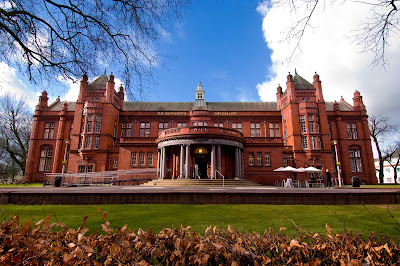
Whitworth Art Gallery

Bedworth (Car Wash)
Research/Influence-
Throughout my contextual study of New Waves 2 of my texts 'Easy Rider' and 'Midnight Cowboy' used trippy and psychedelic imagery which I found interesting. Due to this I decided to use this style of editing as an influence and use it to develop my film to look as psychedelic as possible. The particular sequence I used as an influence from Easy Rider is the LSD scene toward the end of the film where 4 characters take the drug and begin to trip, the overall imagery of the scene suddenly becomes psychedelic and trippy to fit in with the way the characters are feeling. The same thing happens in the sequence I was influenced by in the film Midnight Cowboy, where the 2 protagonists visit Andy Warhol's factory club which can also be viewed below.
Methods and Techniques-
From my initial camera and lighting tests that I carried out earlier on in the year I ensured that I improved on a number of different technical elements. One key technique in which I improved on was ensuring that all of my footage was in focus and that the image was not overly exposed. When I first carried out my initial camera and lighting tests exposure was a key problem and affected quite a lot of my footage. By handling the exposure and focusing correctly it ensured that my footage looked more professional and suitable for a client. I handled the exposure by ensuring that I had the correct aperture and ISO settings selected when I was shooting each part of my footage, something that i was not able to do very well in my initial camera and lightning tests.


In my final video I have a made a short film that appears trippy and psychedelic and includes footage filmed in places such as Manchester, Digbeth and Bedworth. Throughout the course of the film I try to showcase many new wave techniques as possible, these include jump cuts, psychedelic imagery, long takes and non digetic sound. I used these specific techniques to show that I used the period of the new waves as an influence when shooting footage and when editing footage.
I found out throughout my research that jump cuts were used a great deal in Jean Luc Godard's films and also in the texts which i focused my contextual study on, because of this I felt that it was essential to use jump cuts in my film. Psychedelic imagery was also a key part of my film, a lot of my film includes layered footage which gives off a sort of 'trippy vibe'. I used this because in the film midnight cowboy, there is a scene set in Andy Warhols factory club which uses a lot of colour over the top of film and different patterns masking the characters, therefore I felt that by including this in my film it would be a great way of incorporating specific techniques used within the New Wave into my film.
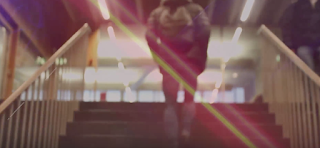

Updated Design Brief-
Although I generally stuck to that of my original design brief there was some parts of it in which I scrapped and new parts which I included. I decided to not film an actor standing in the same spot for 10 seconds whilst a time lapse was happening as I felt that it would not of fitted in well with my film and also it would of taken too long and interrupted my strict filming timetable. Although I filmed in both busy and not so busy parts of each city I only decided to include the footage filmed in not so busy parts e.g. the galleries of Manchester, the graffitied areas of Digbeth and a car wash in Bedworth. I did not include the footage filmed in busy areas as I did not think the quality of the videos looked high enough to feature in my film. A lot of my footage was left out of my film mainly due to the fact that I had filmed so much footage and I simply did not have enough time to edit al of the footage into the film.
Challenges I Faced-
Although I did not face many challenges or problems throughout the course of my New Wave Film production, one issue that i did have was that when editing my footage I discovered that a few of my clips did not render to the full size of the screen. However I was able to find a way around this and overcome the problem, I discovered that in Birtish New Wave films the images did not always fill the screen. I also used a scene in Midnight Cowboy as an influence to amend the issue. Visual evidence of this can be seen below.
Midnight Cowboy
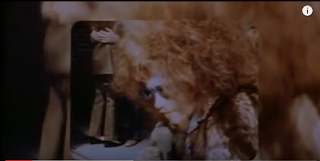

My New Wave Film
The top image is a scene from midnight cowboy and below it is a part of my new wave film. Due to the clip not filling the screen I decided to leave the footage as it was, I did however duplicate the footage, stretch it, lower the opacity and have the duplicated footage playing over the top of the original as can be seen below. I saw this as an effective way of dealing with a problem. I ensure that all of my footage was labeled throughout the course of my production (as can be seen below) this was to ensure that I would not become confused as to what was what and to also ensure that everything was organised. By doing this I made sure that I was never spending valuable time looking for specific clips as I was able to look for the name of them and find them straight away.
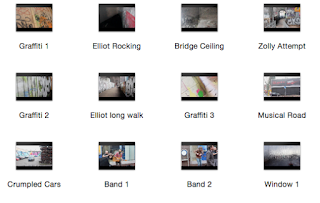
Labelled Footage
Before beginning on the production of my new ave film I planned where I would shoot footage to use in my film and how I would shoot it. Footage I used was filmed in 3 different locations including, Manchester City centre and art galleries around Manchester, the urban areas of Digbeth and finally certain areas of Bedworth. I used these areas in particular as I felt that they were able to give my film the gritty and urban feel that I was going for. Whilst filming in these locations I visited places within Digbeth and Manchester which were covered with graffiti and also visited Art galleries, this was so I was able to create a contrast between the 2 forms of Art in my film.

Digbeth

Whitworth Art Gallery
Bedworth (Car Wash)
Research/Influence-
Throughout my contextual study of New Waves 2 of my texts 'Easy Rider' and 'Midnight Cowboy' used trippy and psychedelic imagery which I found interesting. Due to this I decided to use this style of editing as an influence and use it to develop my film to look as psychedelic as possible. The particular sequence I used as an influence from Easy Rider is the LSD scene toward the end of the film where 4 characters take the drug and begin to trip, the overall imagery of the scene suddenly becomes psychedelic and trippy to fit in with the way the characters are feeling. The same thing happens in the sequence I was influenced by in the film Midnight Cowboy, where the 2 protagonists visit Andy Warhol's factory club which can also be viewed below.
Methods and Techniques-
From my initial camera and lighting tests that I carried out earlier on in the year I ensured that I improved on a number of different technical elements. One key technique in which I improved on was ensuring that all of my footage was in focus and that the image was not overly exposed. When I first carried out my initial camera and lighting tests exposure was a key problem and affected quite a lot of my footage. By handling the exposure and focusing correctly it ensured that my footage looked more professional and suitable for a client. I handled the exposure by ensuring that I had the correct aperture and ISO settings selected when I was shooting each part of my footage, something that i was not able to do very well in my initial camera and lightning tests.


In my final video I have a made a short film that appears trippy and psychedelic and includes footage filmed in places such as Manchester, Digbeth and Bedworth. Throughout the course of the film I try to showcase many new wave techniques as possible, these include jump cuts, psychedelic imagery, long takes and non digetic sound. I used these specific techniques to show that I used the period of the new waves as an influence when shooting footage and when editing footage.
I found out throughout my research that jump cuts were used a great deal in Jean Luc Godard's films and also in the texts which i focused my contextual study on, because of this I felt that it was essential to use jump cuts in my film. Psychedelic imagery was also a key part of my film, a lot of my film includes layered footage which gives off a sort of 'trippy vibe'. I used this because in the film midnight cowboy, there is a scene set in Andy Warhols factory club which uses a lot of colour over the top of film and different patterns masking the characters, therefore I felt that by including this in my film it would be a great way of incorporating specific techniques used within the New Wave into my film.


Updated Design Brief-
Although I generally stuck to that of my original design brief there was some parts of it in which I scrapped and new parts which I included. I decided to not film an actor standing in the same spot for 10 seconds whilst a time lapse was happening as I felt that it would not of fitted in well with my film and also it would of taken too long and interrupted my strict filming timetable. Although I filmed in both busy and not so busy parts of each city I only decided to include the footage filmed in not so busy parts e.g. the galleries of Manchester, the graffitied areas of Digbeth and a car wash in Bedworth. I did not include the footage filmed in busy areas as I did not think the quality of the videos looked high enough to feature in my film. A lot of my footage was left out of my film mainly due to the fact that I had filmed so much footage and I simply did not have enough time to edit al of the footage into the film.
Challenges I Faced-
Although I did not face many challenges or problems throughout the course of my New Wave Film production, one issue that i did have was that when editing my footage I discovered that a few of my clips did not render to the full size of the screen. However I was able to find a way around this and overcome the problem, I discovered that in Birtish New Wave films the images did not always fill the screen. I also used a scene in Midnight Cowboy as an influence to amend the issue. Visual evidence of this can be seen below.
Midnight Cowboy


My New Wave Film
The top image is a scene from midnight cowboy and below it is a part of my new wave film. Due to the clip not filling the screen I decided to leave the footage as it was, I did however duplicate the footage, stretch it, lower the opacity and have the duplicated footage playing over the top of the original as can be seen below. I saw this as an effective way of dealing with a problem. I ensure that all of my footage was labeled throughout the course of my production (as can be seen below) this was to ensure that I would not become confused as to what was what and to also ensure that everything was organised. By doing this I made sure that I was never spending valuable time looking for specific clips as I was able to look for the name of them and find them straight away.

Labelled Footage
Subscribe to:
Posts (Atom)